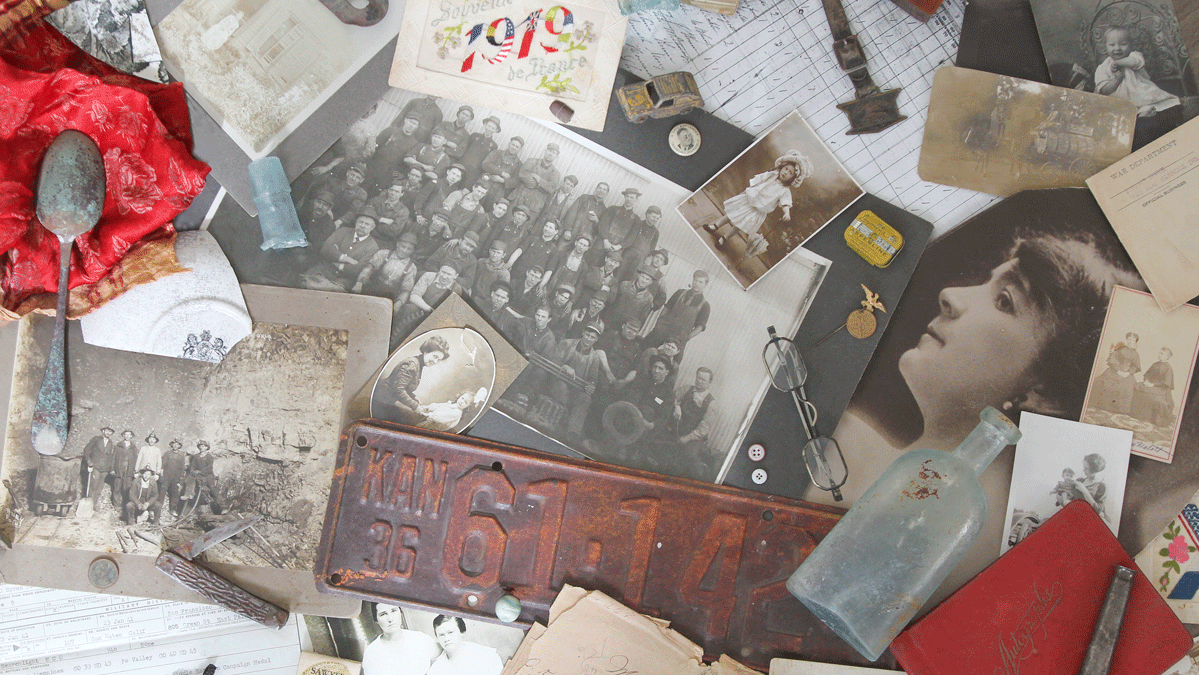
I was recently contacted by the next door neighbor of my mother. She had been digging up some old shrubs in her back yard and came upon some glass and pottery sherds. Knowing that I have an interest in such things, she asked if I might take a look at them. So the next time I was in town, I swung by and picked up three handfuls of miscellaneous broken bits.
One question people often have is, ‘why would you even care about garbage?’ From a historical perspective, one woman’s trash is definitely another woman’s treasure. You can age a homesite by documents such as deeds, mortgages, etc. or even by the architectural characteristics of the actual structure. We can also use ordinary household objects like glass and pottery sherds, buttons, or even the shape of rusted nails to learn when people were living in a given location.
There is a wealth of sites out there to aide us in this process of identifying and learning about bottles, pottery, etc. Characteristics of the shape of the lip (the part of the bottle from which we drink), the color of the glass, or the makers mark on the bottom of pottery can tell us so much! I’ll include a couple of links to them at the bottom. I hope you find them as useful as I have over the years.
With sherds in hands, I did a quick sort between glass and pottery shards followed by a further break down by color. I then spent the next few minutes carefully looking for glass with any type of embossment and pottery that included a maker’s mark or other special characteristics that might be especially illustrative. I’ll just hit on glass in this post. A later post will delve into the pottery side of things.
For my glass test, I quickly determined that eight of the sherds in the pile likely came from the same bottle due to the color and thickness of the glass pieces. However, four of the sherds actually fit together!
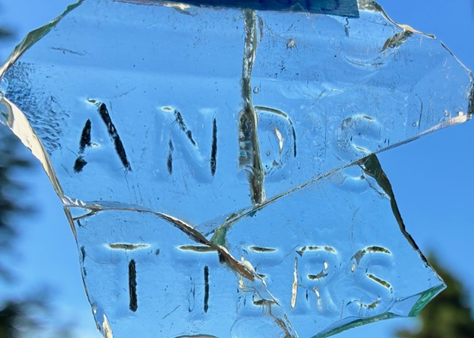
Now, I must confess that once I had these together, I immediately knew what I had- Hoofland’s Bitters. It’s a fairly common 19th century tonic or ”cure” for liver, kidney, and stomach issues. Unbroken, it’s really a lovely bottle. But what if I was not familiar with this? AI to the rescue. I typed the following command into Microsoft Co-Pilot and Google Gemini.
Provide the name of a company that manufactured bitters alcohol in an aqua bottle that includes “and’s” in the name.
Microsoft Co-Pilot was not helpful in the least. Google Gemini came through with the following:
Atwood’s Jaundice Bitters– hmm, where is the “and’s” in that? Nope. Next.
Hoofland’s German Bitters– looks promising.
Rowand’s Tonic Mixture– maybe.
If you then do a Google image search for ‘Hoofland’s German Bitters’, you can see some wonderful pictures of intact Hoofland’s Bitters bottles where the color of the images matches my sherds and where the text in my sherds matches perfectly the font and positioning of the text from the images. With some additional research, I also learned that the Hoofland’s Bitters was manufactured until 1893.
Interestingly, the land on which the sherds were found have been in my mother’s neighbor’s family continuously since the early 1880’s. Given that these sherds were from a bottle manufactured pre-1893, it’s likely that her ancestors were the original purchasers. While it is a shame that the bottle did not survive the decades intact, her neighbor was still tickled by the fact that her ancestor might have held this same glass in her hand some 135 years ago.
Sources
https://secure-sha.org/bottle/
https://glassbottlemarks.com/
https://peachridgeglass.com/2012/10/a-larger-dr-hooflands-german-bitters-spotted-in-the-hayfield/